ServicesPreventative Maintenance
Loading Dock Preventative Maintenance in Freeland
On a regular schedule, we inspect, lubricate and adjust your dock levelers, overhead doors, vehicle restraints and seals. Every visit ends with a written report in everyday language that shows what is wearing, why it matters and which repairs can be put off.
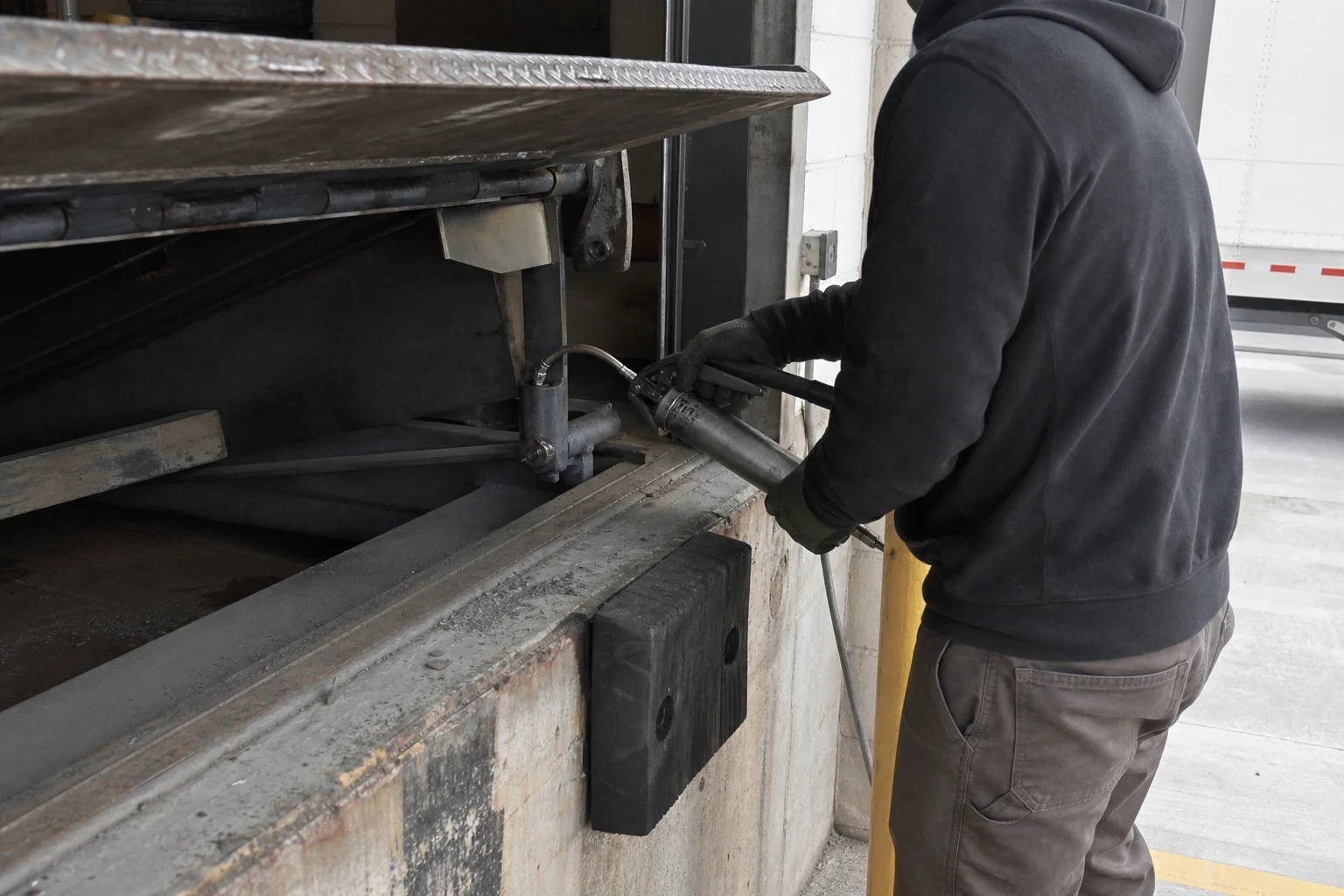
What preventative maintenance actually covers
Loading dock preventative maintenance is a scheduled visit where we go through every moving part at each dock position before it fails. Most dock breakdowns start small: a dry hinge pin, a slow hydraulic leak, a frayed door cable, a restraint hook that no longer reaches the trailer's rear impact guard. Caught early, these are adjustments. Caught late, they become a dock position out of service in the middle of a receiving day.
It is the right call for any facility that runs trailers daily and cannot afford to lose a door. Warehouses, distribution centers, manufacturers and grocery receiving docks all see the same pattern. Equipment works until it suddenly does not, and the cause was usually visible weeks earlier.
Our approach is simple. We check the equipment, then explain each finding the way we would to a coworker: what the part does, what we saw and what happens if it is left alone.
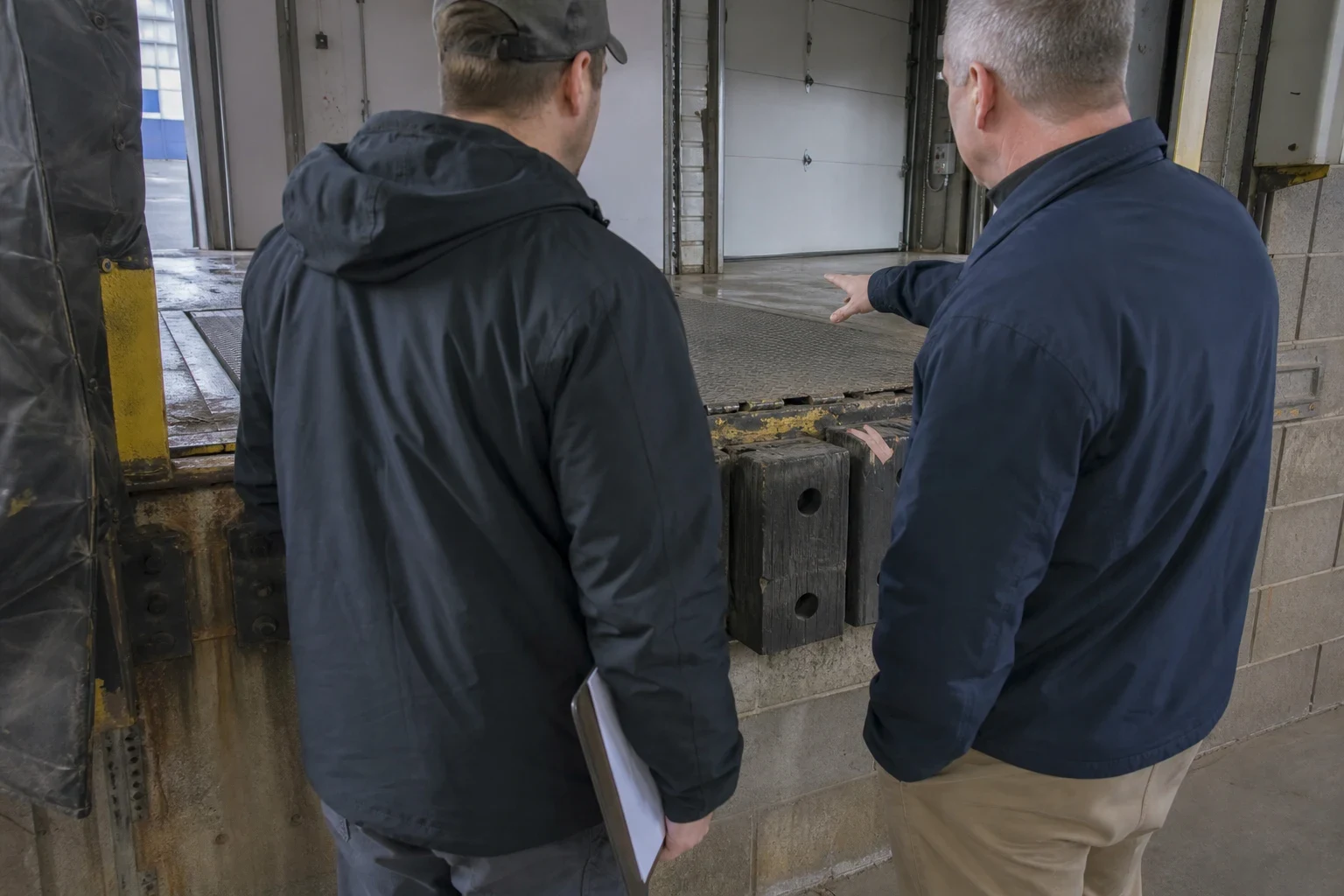
What each dock position gets checked for
- 01
Leveler hydraulics and steel
Cylinders, hoses and fittings are checked for seepage, fluid is checked for level and condition, and we test the velocity fuse that keeps the deck from dropping if a trailer leaves. The hinge tube, lip hinge pins and deck welds get looked over for cracks, and pivot points are greased. Mechanical levelers also get a hold-down and spring tension check.
- 02
Overhead door parts
We check torsion springs, cables, drums, rollers, hinges and how the track lines up. A spring that has lost tension or a cable with broken strands strains the operator and can let a door fall. Each door is balanced and its moving parts lubricated.
- 03
Restraints and interlocks
The restraint hook or barrier is tested for full travel and holding force, and the inside and outside lights are checked so both the forklift driver and the truck driver get the correct signal. Where your restraint, door and leveler are interlocked, we make sure they run in the proper order.
- 04
Seals, shelters and bumpers
A torn seal lets snow and cold air inside and pushes up heating bills. Worn bumpers let trailers hit the wall and the leveler lip. We record any tears, crushed foam and missing bumper pieces.
- 05
Controls and safety devices
Push-button stations, photo eyes, edge sensors and stop buttons are all tested. Safety devices that were bypassed or knocked out of line are among the things we find most often, and among the most important to correct.
Questions about Preventative Maintenance?
Call(570) 521-9737Signs your dock is overdue for maintenance
The deck sags or climbs sluggishly
When the platform settles under a forklift or needs extra seconds to come up, the usual causes are low fluid, a tired pump or fluid bypassing inside the cylinder. Winter thickens old or dirty fluid and slows it further.
Oil spots under the pit
Hydraulic fluid on the pit floor means a hose, fitting or seal is failing. It also creates a slip hazard for anyone who steps down to clear debris.
Doors that jerk, bang or reverse
Uneven travel usually comes from worn rollers, a bent track section or a spring out of balance. A door that reverses on its own may have a misaligned photo eye.
Restraint lights that disagree
If the inside light shows green while the hook is not engaged, the restraint is giving false information. Stop using that position until it is checked.
Daylight around the trailer
Gaps at the seal or shelter mean torn pads or a seal pushed out of shape. You lose conditioned air every time a trailer is at the door.
What happens on a maintenance visit
- 1
Plan the visit over the phone
Let us know your number of dock positions, the equipment at each one and your receiving windows. We time the work so it happens between live trailers, not in the middle of them.
- 2
Lockout, then inspection
Only one position is out of service at a time, and its power is locked out before we start. Every leveler, door, restraint and seal goes through the same checklist so no item is missed.
- 3
Grease, adjust and tighten
Minor fixes are done right there: hinges greased, door balance set, photo eyes aligned, loose fasteners snugged and fluid topped off. We return the position to service before moving down the dock.
- 4
Report and photos in writing
Each position gets its own report with our findings, photos of worn or damaged parts and a clear note on the risk. Urgent items are listed apart from ones you can schedule later, and any repair you pick comes with line-item pricing.
What decides the cost of preventative maintenance
The price mainly comes down to how much equipment we look after and how often we visit. You get the cost over the phone or after a first walk-through, and anything beyond routine adjustment gets its own written quote before we start it.
- How many dock positions you have
- Every position has a leveler, door, restraint and seal of its own. Servicing a ten-door distribution center takes more time than a two-door retail dock.
- What equipment you run
- Hydraulic and mechanical levelers, high speed doors and powered restraints all call for different service steps. A mix of brands from several manufacturers takes longer.
- How often we come
- A busy dock working several shifts generally needs visits more often than one that gets a handful of trailers each week. Steady visits also keep each one shorter.
- Equipment age and shape
- Older equipment that has gone years without service usually needs extra adjustment the first time. Once the dock is back to a good baseline, that cost tends to come down.
- Working around your operation
- If we can only work between trailer appointments or outside regular shifts, the visit may run longer. We sort this out with you ahead of time.
Questions about preventative maintenance
How frequently should dock equipment get serviced?
Two to four visits a year suits a lot of docks. A building moving trailers across three shifts wears out parts faster than one getting a few deliveries daily. We weigh your traffic and the age of your equipment, suggest a schedule, and change it based on what we see.
Does maintenance stop our receiving?
Not the whole dock. We handle a single position at a time and put it back in service before moving on, so your crew can keep unloading at the other doors.
Will you service equipment someone else installed?
We will. Most levelers, overhead doors and restraints are built from the same basic parts, so who put them in does not matter to us. When a part only comes from one manufacturer, we let you know and get it.
What if you find a part that should be replaced?
You get the photo, a short explanation of what the part does and how it would fail, and a written price. Then you choose to fix it now or schedule it later. When replacing makes more sense than repairing, we tell you why, and our dock levelers and vehicle restraints pages cover the options.
Will we have a record of every visit?
You will. After each visit you receive a written report for every dock position. Plenty of facilities file them for internal safety reviews and to see which equipment is getting close to the end of its useful life.
Stay ahead of the next dock breakdown
Tell us how many dock positions you run and roughly which levelers, doors and restraints sit on them. We use that to set up a maintenance schedule for your facility in Freeland or a nearby town such as Hazleton or Mountain Top.