ServicesHigh Speed Doors
High Speed Doors in Freeland, PA
We repair, service and install high speed doors for warehouses, food facilities and manufacturing floors. We find why the door is faulting, slowing or tearing, explain the fix in plain terms, and get the opening cycling safely again so traffic and temperatures stay where they belong.
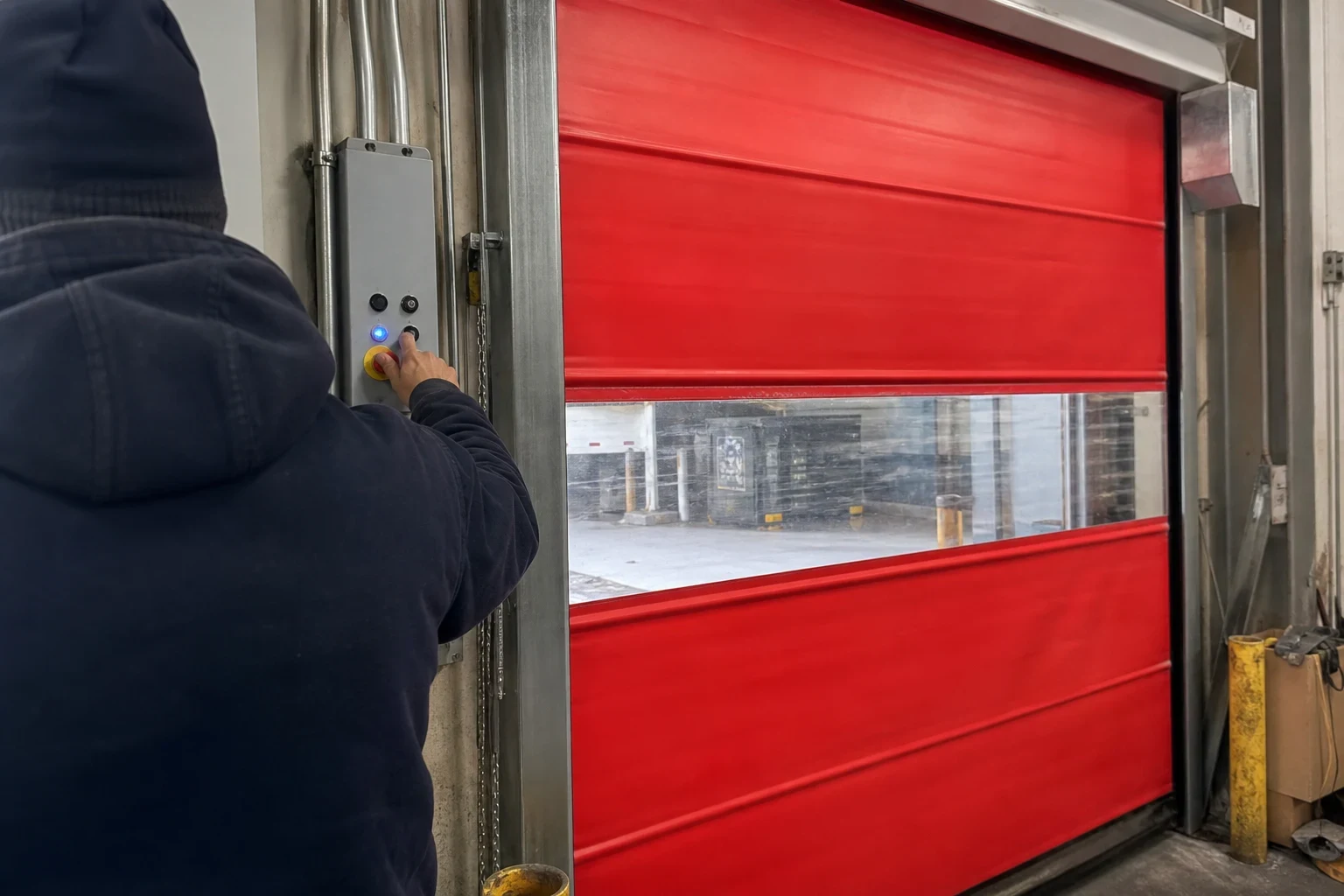
What a High Speed Door Does and Why It Fails
Where a standard overhead door takes several seconds to travel, a high speed door clears the opening in a fraction of that time, and on a busy floor it may run hundreds of cycles in a single shift. Most use a flexible PVC-coated polyester curtain running in side guides, driven by a motor with a variable frequency drive that ramps speed up and down. Rigid spiral or panel versions do the same job where insulation or security matters more. They separate cold rooms from docks, keep dust and drafts off production lines, and let forklifts pass without waiting.
That cycle count is what wears them out. Curtains get clipped by forks and pulled from the guides, encoders lose their position, photo eyes drift out of alignment, and brakes and belts wear faster than on any door that opens a few times a day. Through a long Freeland winter, a door that hangs open or reverses for no reason can cost you real heat and real throughput.
We treat each call as a diagnosis first. You hear what failed, why it failed, and whether the answer is an adjustment, a part, or a conversation about a different door.
What We Handle on High Speed Doors
- Curtain re-feeding and new curtains
- A lot of fabric doors use a breakaway or self-repairing curtain that pulls free of the guides on impact. We feed it back in, look for burrs at the guide entries that would keep ripping it, and replace panels or the whole curtain when the fabric is slashed or the windows are cracked.
- Motor, drive and brake work
- The motor, gearbox, brake and VFD settings all get checked. When the drive is set to speed up too aggressively, it wears out the brake and rattles the header, so we review the settings as well as the hardware.
- Encoders and limit settings
- A door that stops early, runs past its mark or keeps relearning where it is usually has an encoder or limit problem. We test it, recalibrate it or put in a new one so the open and close points stay put.
- Safety and activation equipment
- We test and align photo eyes, light curtains, reversing edges, radar and motion sensors, pull cords and floor loops. When a door comes down on traffic or opens for every pallet jack that rolls by, the cause is usually in one of these.
- Installing new doors
- Once repair stops making sense, we put in new high speed doors sized for the opening and its traffic and wire them into the controls you already have. Bigger dock projects are handled as part of our loading dock equipment installation work.
Signs Your High Speed Door Needs Attention
The curtain keeps coming out of the guides
One hit is normal. Repeated pull-outs with no impact point to worn guide entries, a bent bottom bar or a curtain stretched out of size.
Fault codes on the control panel
Encoder, overtravel and drive faults are the door telling you something specific. Write the code down before you reset it; it saves time on the diagnosis.
Slower cycles or a rough stop
A door that drags, bangs at the top or creeps closed often has a worn brake, a slipping belt or drive settings that have changed.
Opening for no reason, or not at all
Misaligned radar, a damaged floor loop or a dirty sensor lens can cause ghost openings or a door that ignores a forklift. Both cost you energy and time.
Torn fabric or cracked vision panels
Small tears grow with every cycle and let air through. Cracked panels also hide approaching traffic, which is a safety problem as much as a cosmetic one.
How a Service Visit Runs
- 1
You describe the problem by phone
Tell us the door type if you know it, what it is doing and any fault codes shown. That helps us bring the right test equipment and likely parts.
- 2
We lock out and inspect
We lock out power, then check the curtain, guides, bottom bar, drive, brake, encoder and every safety device. We show you what we found and photograph damage where it helps.
- 3
We explain your options
You get a plain answer: adjust it, replace specific parts, or plan for a new door. We tell you what each option fixes and what it leaves alone.
- 4
Repair and cycle test
After the work, we run the door through repeated cycles, test every reversing and safety device, and confirm the open and close points hold before we hand the opening back to your crew.
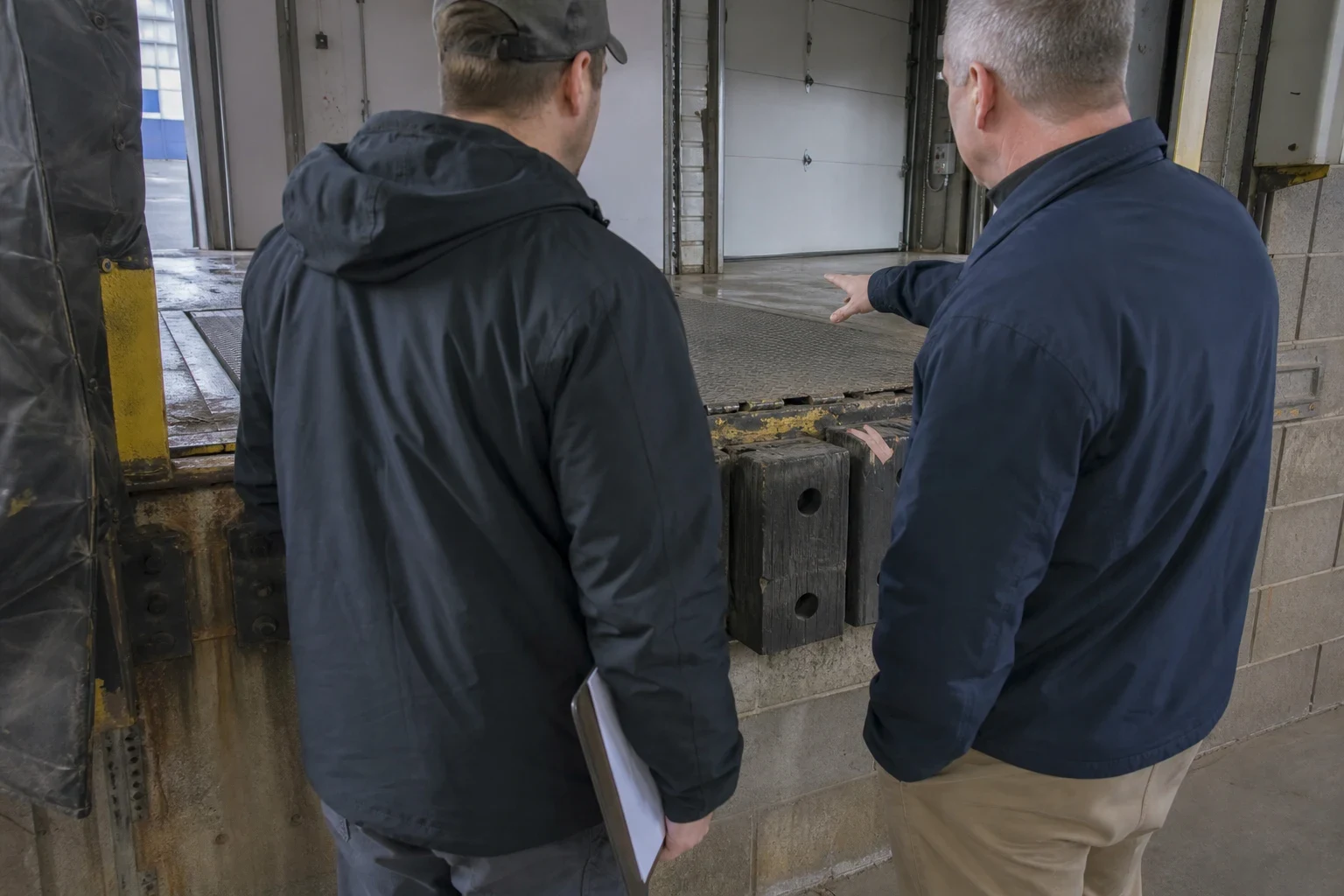
What Moves the Cost of High Speed Door Work
Most of the price comes down to which part failed and whether we can get it. A re-feed and alignment is a short visit. A new drive, curtain or full door is a different job. We explain the cost drivers before work starts so nothing comes as a surprise.
- Door make and part availability
- Some manufacturers stock curtains and controllers widely, others build to order. Lead time on a proprietary board or curtain can matter more than the part itself.
- Fabric versus rigid construction
- Fabric curtain repairs are usually simpler. Rigid spiral and insulated panel doors have more moving parts and take more labor to service.
- Opening size and access
- Tall or wide openings, doors over racking, and headers that need a lift all add time and equipment.
- How much damage the impact caused
- A clean breakaway is minor. A hit that bent the guides, the bottom bar or the header shaft means more parts and more hours.
Questions About High Speed Doors
Something not covered here? (570) 521-9737
Do you service all high speed door brands?
We work on most of the common fabric and rigid high speed doors. A few controllers rely on proprietary software or parts available only from the manufacturer. If your door is one of them, we say so at the start and explain how long it may take.
Does it pay to fix an older high speed door?
Frequently it does, provided the structure, guides and drive are in good shape and parts are still available. When the controller is obsolete or the door breaks down every few weeks, a new door usually comes out cheaper over a year. We set out both choices and you decide.
What makes my door reverse before it fully closes?
Most often it is a photo eye that is dirty or out of line, a light curtain seeing debris, or a reversing edge damaged in a hit. Less commonly, the encoder has drifted and the controller believes something is blocking the door. We check each possibility until we find the cause.
Should our high speed door be linked to the dock equipment?
At a dock, an interlock with the vehicle restraint or dock leveler stops the door from opening until the trailer is held. Many facilities use this safety step, and we can show you how it would work at your doors. Our Vehicle Restraints and Dock Levelers pages have more.
How often do high speed doors need service?
They run so many cycles that they need checking more often than a standard overhead door. How often depends on daily cycles and conditions, and we include these doors in our loading dock preventative maintenance visits.
Find Out Why Your Door Keeps Faulting
Give us the symptoms and any fault codes, and we will walk you through the likely cause and what a service visit would cover. We serve facilities in Freeland, Hazleton, Mountain Top and nearby towns.