ServicesDock Levelers
Dock Leveler Repair in Freeland, PA
A dock leveler that will not raise, drops too fast or leaves a lip hanging short slows every load and puts forklift drivers at risk. We find the failed part, show you why it failed, and explain your repair options before we touch a wrench.
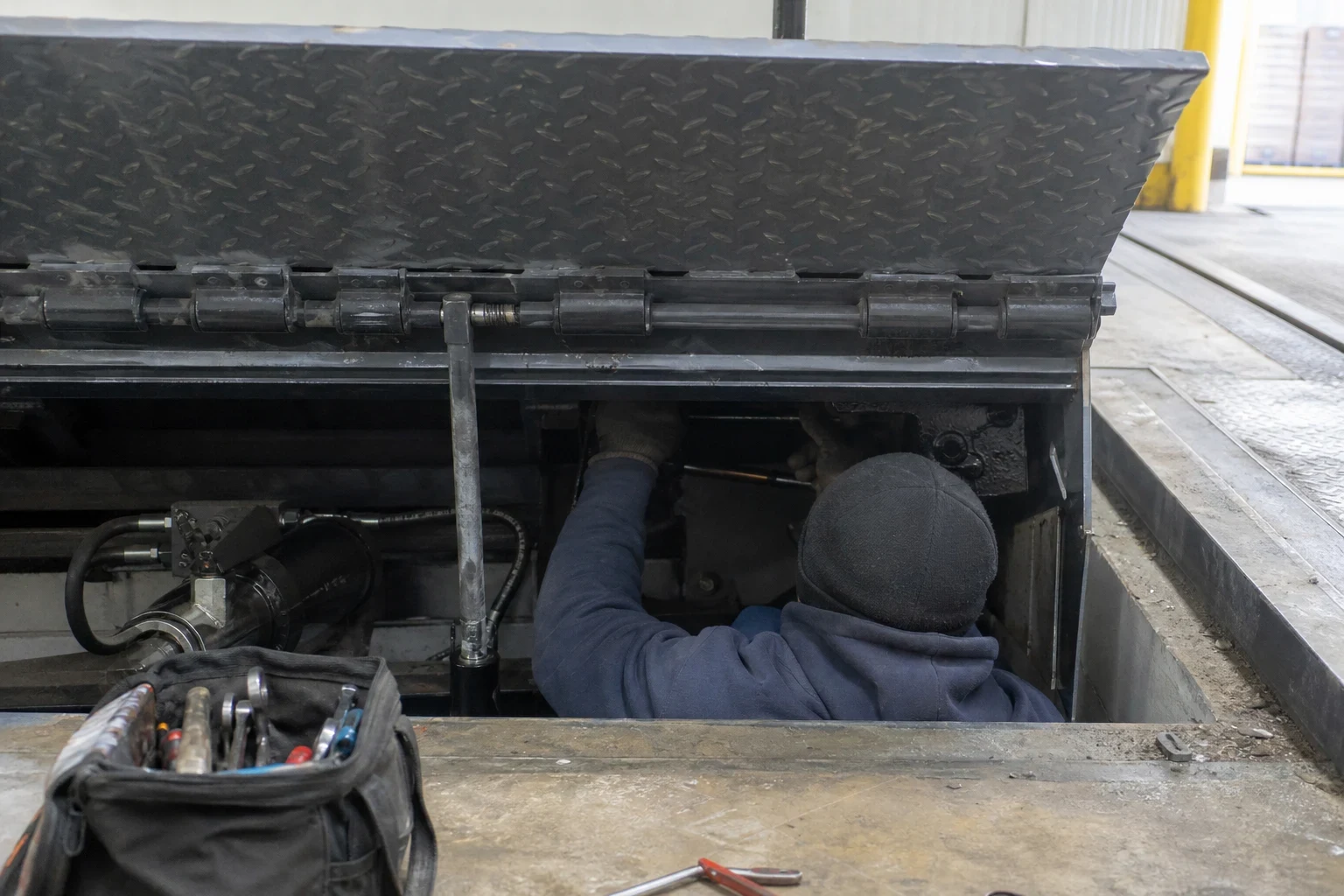
What our dock leveler service includes
A dock leveler closes the gap and evens out the height between your dock floor and the trailer bed. It works through three parts: the deck plate that takes the load, the hinged lip that lands on the trailer, and the lift system that raises them. On a mechanical leveler that lift is a set of springs, on a hydraulic unit it is a cylinder and power pack, and on an air-powered model it is an inflatable bag.
Nearly every leveler failure comes from one of those parts. Springs weaken or break. Hydraulic seals seep and the pump stops holding pressure. Lip hinges lock up with rust and dirt. We repair all three kinds, in pit-mounted and edge-of-dock setups, and explain which part is behind your problem in terms your shift lead can pass straight to the plant manager.
What the Work Includes
- Lip and hinge repair
- A lip that will not extend or drops before it reaches the trailer usually has bent hinge knuckles, worn hinge pins or packed debris. We clean the hinge tube, replace pins and straighten or reweld the lip plate when the steel allows it.
- Hydraulic system service
- We check the cylinder, hoses, fittings and power pack for leaks, test the velocity fuse that stops a free fall if a trailer pulls away, and replace seals or components that have failed. Fluid gets topped off or changed with the grade the manufacturer calls for.
- Spring and hold-down work on mechanical units
- Mechanical levelers depend on correctly tensioned lift springs and a working hold-down that keeps the deck from floating up. We adjust or replace springs and rebuild the release chain and hold-down mechanism so the deck walks down and stays put.
- Deck and frame structural repair
- Cracked deck plate welds, broken header beams and sagging front frames show up after years of heavy forklift traffic. We weld, reinforce or replace sections and tell you plainly when the frame has reached the point where repair no longer makes sense.
- Toe guards, bumpers and weatherseals
- Toe guards keep feet clear of the gap under a raised deck, and dock bumpers keep trailers from slamming the pit edge. We replace both, along with the brush or rubber seals that block drafts around the deck.
Signs Your Dock Leveler Needs Attention
The deck drops or bounces
A deck that sinks under load or rebounds after a forklift crosses points to a weak hydraulic cylinder, worn springs or a failing hold-down. It is one of the most common causes of dropped pallets.
The lip does not fully extend
If the lip stops short of the trailer bed, the forklift crosses an unsupported edge. Hinge corrosion and bent lip plates are the usual causes.
Oil under the pit
A puddle or stain below a hydraulic leveler means a seal, hose or fitting is leaking. Left alone, the unit loses lifting force and eventually will not raise at all.
Grinding, clunking or a slow cycle
New noises during raise and lower usually mean dry pivot points or binding hinges. Grit and road salt tracked in from trailers through the winter speed this up.
Visible cracks or bent steel
Look along the deck welds, the lip hinge and the front curb angle. A crack that was a hairline last month and is longer now needs to be looked at before it gives way.
What Drives the Price of a Leveler Repair
The same symptom on two levelers can lead to very different repair bills. It comes down to which part broke and how much wear has built up around it. Before any work begins, you get a plain explanation of the repair and the parts involved.
Which kind of leveler
Hydraulic, mechanical and air-powered levelers each take their own parts. A hydraulic power pack runs higher than a set of springs, while getting a mechanical unit's tension right can take more labor.
Whether parts are in stock
Parts for current models are often ready to ship. Older or discontinued levelers may call for fabricated parts or a longer wait, which changes both the price and the schedule.
How much steel is damaged
One cracked weld is a quick fix. A broken header beam or a pit frame rusted all the way through needs much more steel and welding time.
Scheduling and access
Working during off-shifts, or at a door that has to stay open to traffic, needs more planning. Debris packed deep in the pit has to be cleared out before the repair can start.
What a leveler repair visit looks like
- 1
A phone call first
Share the type of leveler, the brand if you have it, and how it is acting. With that we can load the parts it probably needs and fit the visit around your receiving.
- 2
Locked out and inspected
The door comes out of service, leveler power is locked out and the maintenance strut goes in before anyone gets under the deck. We then check the lip, hinges, lift system, frame and safety devices.
- 3
Our findings, shown to you
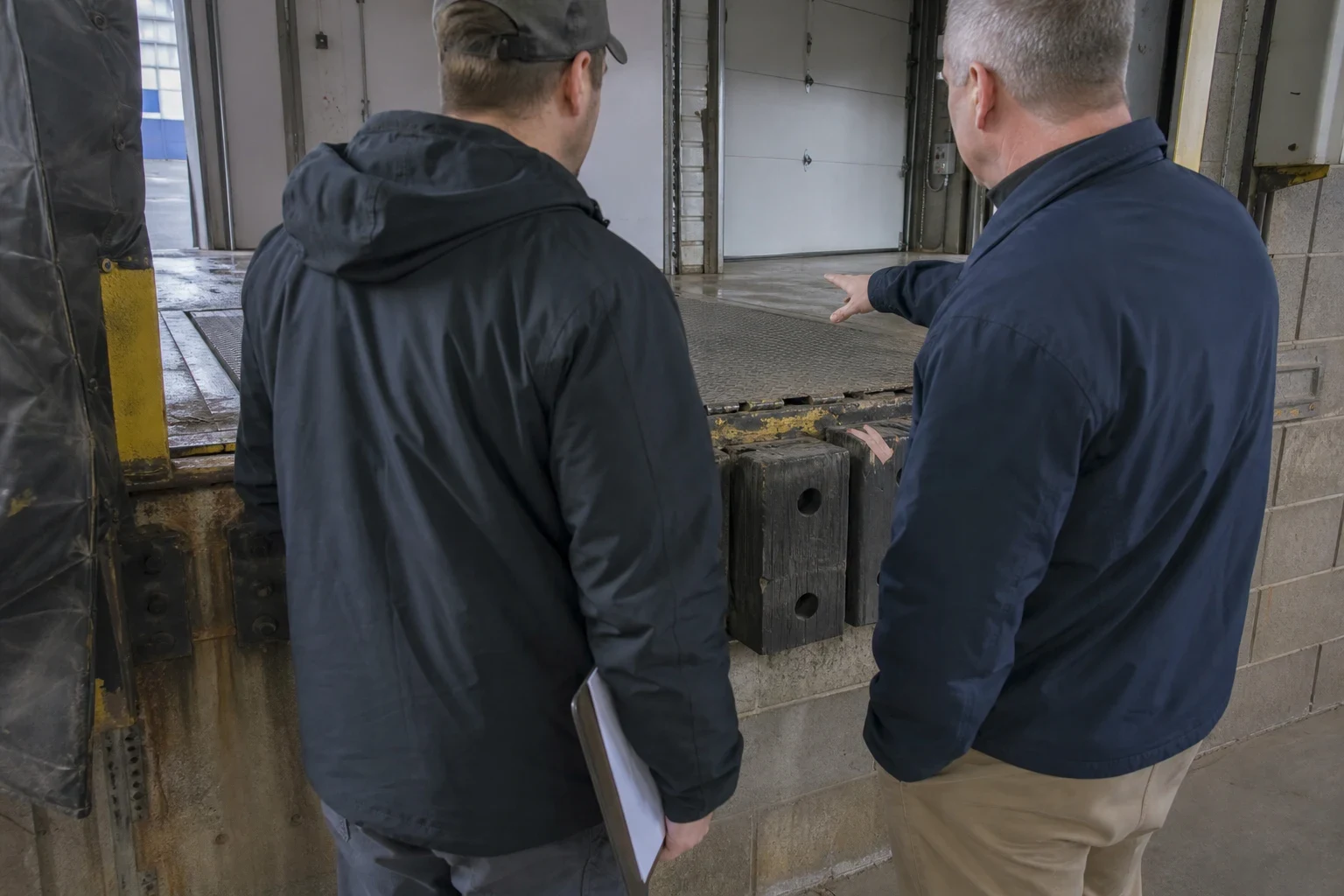
You hear the cause in everyday words, see photos of the worn or broken parts, and get your choices: fix it today, fix it once a part arrives, or replace it. We cover how each affects downtime and how long the repair should hold up.
- 4
Tested before it goes back to you
With the repair finished, we raise and lower the deck several times and check that the lip extends, seats and tucks back cleanly. When a trailer is in place, we run a loaded forklift over the deck to make sure it stays steady. Then the pit is swept and the door is returned to your crew.
Questions About Dock Levelers
Is our leveler worth repairing, or should it be replaced?
If the deck and frame are solid and the failure is in a part that can be swapped, such as springs, seals, hinge pins or a power pack, repair is usually the answer. Replacement is worth weighing once the frame has cracks in several spots, parts are discontinued, or you are calling for repairs every few months. We tell you plainly based on what we find, and our Loading Dock Equipment Installation page explains what putting in a new unit takes.
How do hydraulic and mechanical levelers differ?
Mechanical levelers lift the deck with springs, and an operator walks it down onto the trailer. Hydraulic levelers run off a pump and cylinder at the push of a button, so they take less effort and fewer adjustments. They cost more at the start but usually need less work on springs and chains.
Do you repair every brand of leveler?
We do. The basic design is similar across most levelers, so any brand can be diagnosed. A few proprietary parts must be ordered, and if yours needs one we let you know before the repair is scheduled.
How long will the dock door be down?
Plenty of hinge, seal and spring repairs wrap up in one visit. Structural welding or a new power pack can take more time, more so when a part is on order. You know the expected downtime ahead of time so trucks can be moved to another door.
What keeps this from happening again?
Leveler failures usually begin as something minor: hinges running dry, a small hydraulic leak, a spring slowly losing tension. Routine inspection and greasing find them early. Our Loading Dock Preventative Maintenance service looks after levelers together with the doors and vehicle restraints at the same dock.
Get Your Leveler Back in Service
Tell us what your dock leveler is doing and we will explain what is likely wrong and what it takes to fix. Freeland, Hazleton and Mountain Top facilities can get a repair visit scheduled in one call.