ServicesEquipment Sales
Loading Dock Equipment Sales in Freeland
We help you buy dock levelers, vehicle restraints, seals, bumpers and doors that match your dock height, trailer mix and forklift weights. We measure first, explain each option in plain English, and put the recommendation in writing so you know what you are paying for.
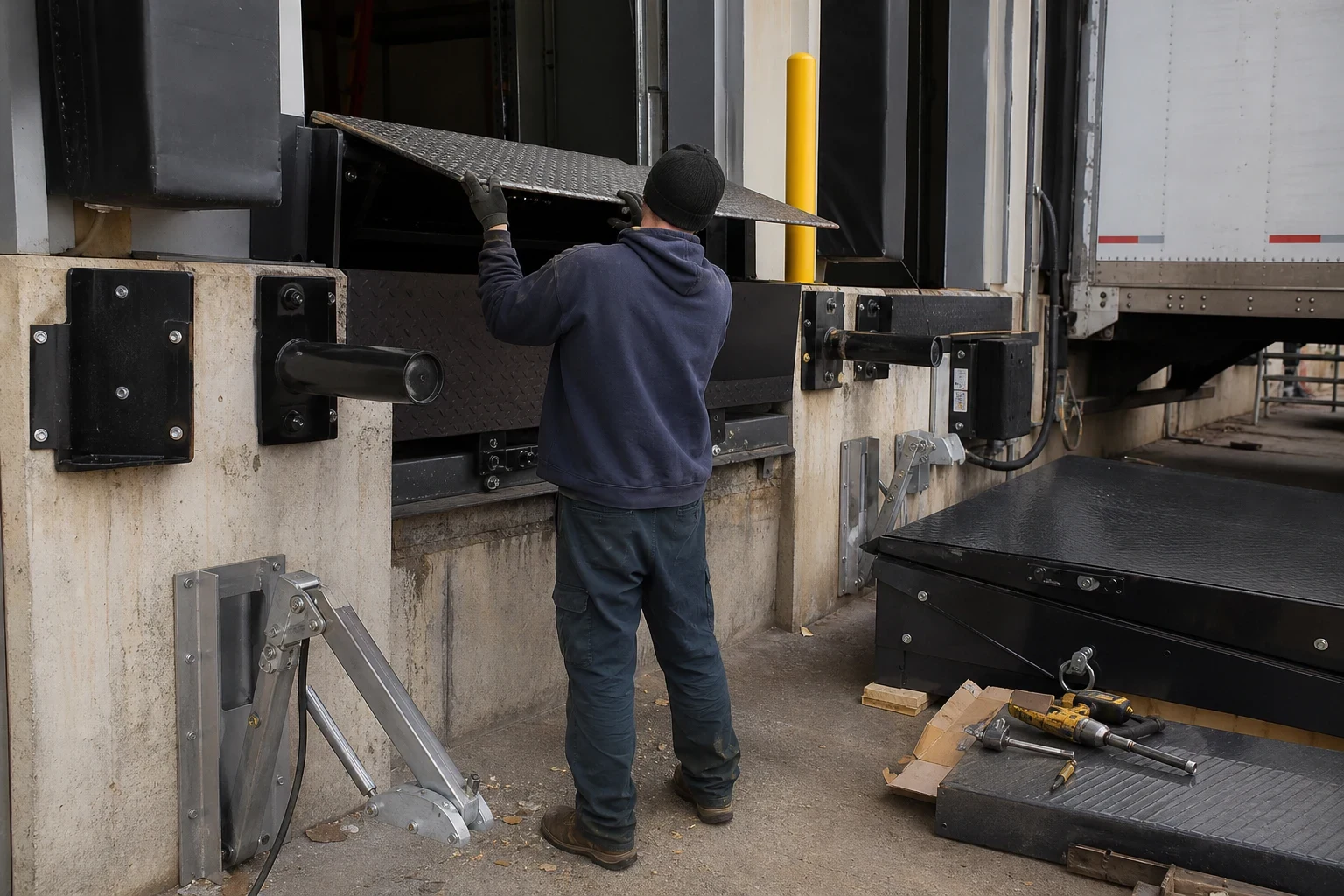
Equipment chosen from measurements, not a catalog page
A lot of dock equipment trouble begins when it is bought. A leveler rated for the forklift but not the forklift plus its load, a lip that can't span the gap at a tall dock, or a seal built for trailers you stopped receiving will all run fine at first and wear out early. So we begin with the measurements that set the spec: dock height, the spread of trailer bed heights, pit size, door opening size and the gross weight of your heaviest loaded truck.
Then we show you the practical options and what each means for the people using it: hydraulic or mechanical leveler, hook-style or wheel-based restraint, foam seal or shelter. We point out where a cheaper choice will do the job and where it will lead to repairs and downtime down the road.
Our Loading Dock Equipment Installation crew can set the equipment for you too. And if what you have now just needs work, we'll tell you so and send you to Dock Levelers or Loading Dock Preventative Maintenance.
What we sell and how we spec it
- Dock levelers
- We sell hydraulic, air-powered and mechanical pit levelers, and edge-of-dock units for docks with light, infrequent traffic. Platform length is picked so the slope stays easy for your pallet jacks, and capacity covers the whole rolling load: forklift, pallet and the jolt of driving into the trailer.
- Vehicle restraints
- Hook-style units catch the trailer's rear impact guard, and wheel-based units hold the tire when a guard is damaged or a liftgate is in the way of a hook. Both come with inside and outside signal lights so the driver and forklift operator read the same status.
- Seals and shelters
- Foam seals compress for a tight fit when your trailers are mostly the same width. Shelters keep the whole trailer opening clear and handle a mixed fleet. The choice comes from the trucks that really back up to your doors.
- Bumpers and wheel guides
- Molded rubber, laminated or steel-faced bumpers, picked by how often and how hard trailers strike the wall. With enough projection, they protect the building and the leveler lip alike.
- Doors for the dock opening
- Insulated sectional overhead doors, fabric high speed doors and rolling grilles, sized for the opening and the number of times the door runs each day. Each type has a page of its own with more detail.
Signs it is time to buy instead of repair
The same leveler keeps coming back
When the lip hinge is cracked, the deck is bowed and the hydraulic pump has been rebuilt twice, each repair buys less time. We will show you the repair history math plainly.
Your forklifts got heavier
A switch to larger lift trucks or denser freight can push total load past what the leveler was rated for. Overloaded decks bend at the header plate and crack at the lip.
Trailers no longer line up
Air-ride suspensions and lower-deck trailers sit at different heights than the fleet your dock was built for. If the leveler cannot reach comfortably above and below dock, freight and operators take the jolt.
The restraint misses the guard
A hook restraint that fails to engage bent or offset impact guards leaves trailers held only by chocks. A wheel-based restraint may be the better fit.
Drafts and light around the trailer
Torn or flattened seals let heat out and weather in, which matters through a Pennsylvania winter. Daylight between the trailer and the pad is a clear sign.
What moves the price of dock equipment
A quote for dock equipment comes down to two things: the build of the unit itself and the work your dock needs before it can accept that unit. The factors below shift the number the most. During the survey we tell you which of them apply at your doors and which you can skip.
Type and capacity
Hydraulic levelers cost more than mechanical ones but need less physical effort and fewer spring adjustments. Higher capacity ratings mean heavier steel and stronger hinges.
Pit condition
An existing pit that matches standard dimensions keeps costs down. Crumbling curb angles, a pit that must be enlarged, or a new pit cut into the slab add concrete work.
Controls and interlocks
Linking the leveler, restraint and overhead door so one cannot operate out of sequence adds wiring and control panels, and adds a real layer of safety.
Options and accessories
Longer lips, toe guards, dock lights, communication light packages and insulated pit seals each add to the total.
Power at the door
Hydraulic units and powered restraints need electrical service at each door. If it is not there, an electrician's work is part of the job.
How a purchase works with us
- 1
Site survey
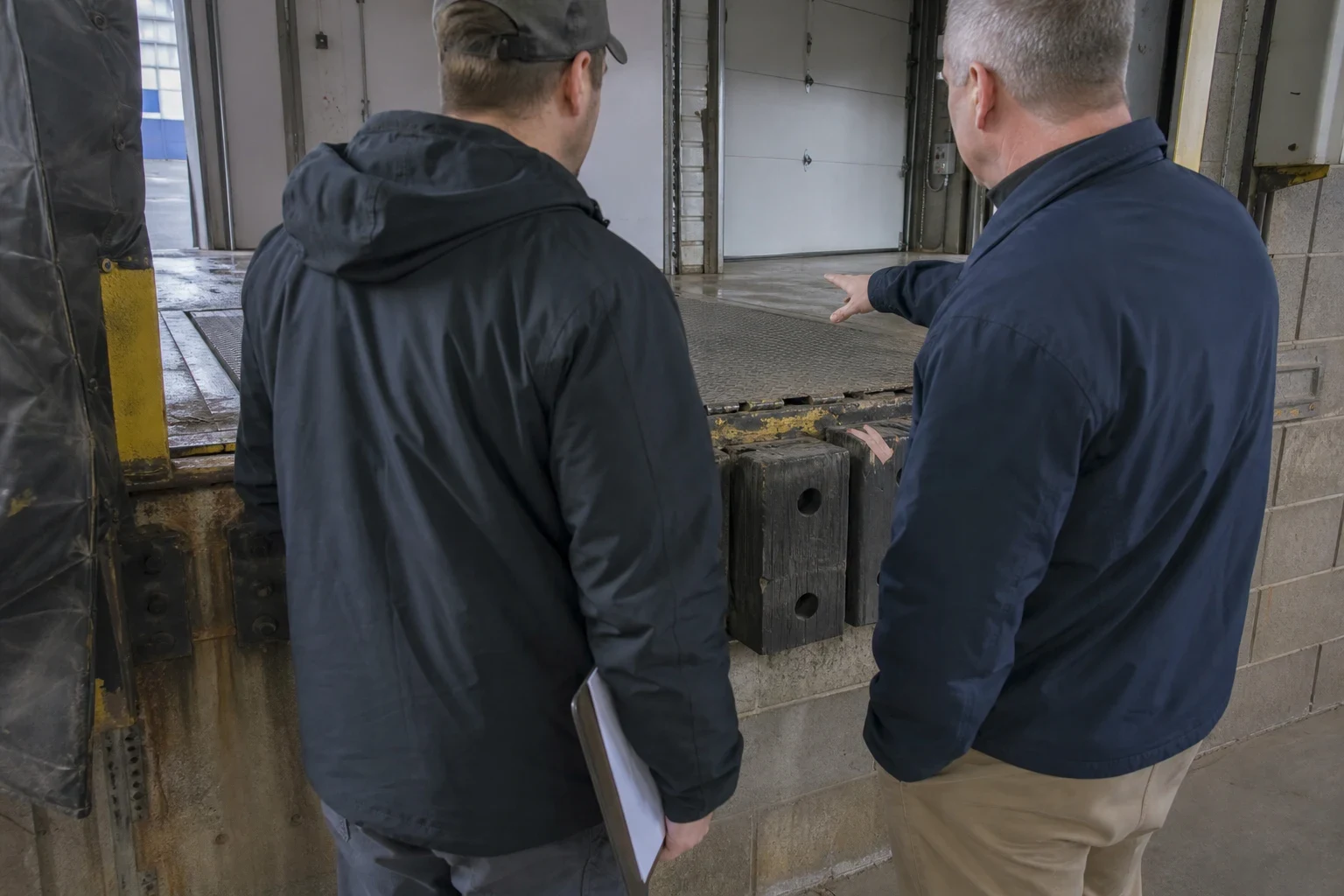
We visit your facility, measure dock height, pit size and door openings, and look at the condition of the concrete and curb angles. We ask about your trailer mix, forklift models and daily door cycles.
- 2
Options explained
We walk through two or three suitable choices and what separates them: capacity, lip length, controls, safety interlocks and long-term maintenance. You get the trade-offs in plain language.
- 3
Written quote
The quote lists each piece of equipment, its key specs and any pit or electrical work needed. You can compare it line by line.
- 4
Ordering and scheduling
Once you approve, we order the equipment and give you an expected delivery window based on the manufacturer's lead time. We plan installation around your receiving schedule to limit downtime.
Questions about buying dock equipment
Will our current pit work with a new leveler?
Often, yes. Replacement levelers are built to common pit sizes, so swapping one in usually needs no new concrete. We still measure the pit and check the curb angles and slab edges first, because a leveler sitting in a damaged pit rocks, goes out of level and wears early.
How do we figure out the capacity rating?
Start with your heaviest loaded forklift plus the heaviest pallet it moves, then factor in how often and how quickly it crosses the leveler. Fast, repeated crossings stress the deck more than the weight alone would suggest. We work through those numbers with you at the survey.
Should we choose a hydraulic or mechanical leveler?
A mechanical leveler runs on springs and a pull chain, costs less to buy and suits docks with lower traffic. A hydraulic leveler works from a push button, is easier for operators and generally needs fewer adjustments at a busy dock. Your daily trailer count decides which one fits.
Does a vehicle restraint fit every trailer?
A hook-style restraint needs a rear impact guard that is intact and where it should be. For trailers with liftgates or bent guards, a wheel-based restraint holds the tire instead. We review the trailers you usually receive before suggesting either.
Will you install the equipment we buy?
Yes. Our installation crew sets levelers, restraints, seals, bumpers and doors and can work around your shifts. If you'd rather, you can buy from us and have your own contractor do the install.
When will new equipment be delivered?
That varies with the manufacturer, model and options you pick. Your quote includes an expected timeline, and we let you know if it shifts.
Get the right equipment for your dock
Tell us about your dock height, trailers and forklifts, and we will set up a survey of your facility in Freeland or nearby towns like Hazleton and Mountain Top. You will get options explained in plain terms and a written quote.