ServicesEquipment Installation
Loading Dock Equipment Installation in Freeland
We install dock levelers, vehicle restraints, bumpers, seals and lights matched to your pit, your trailers and the loads your forklifts carry. Before anything is ordered, we walk you through each option in plain English so you know what you're buying and why.
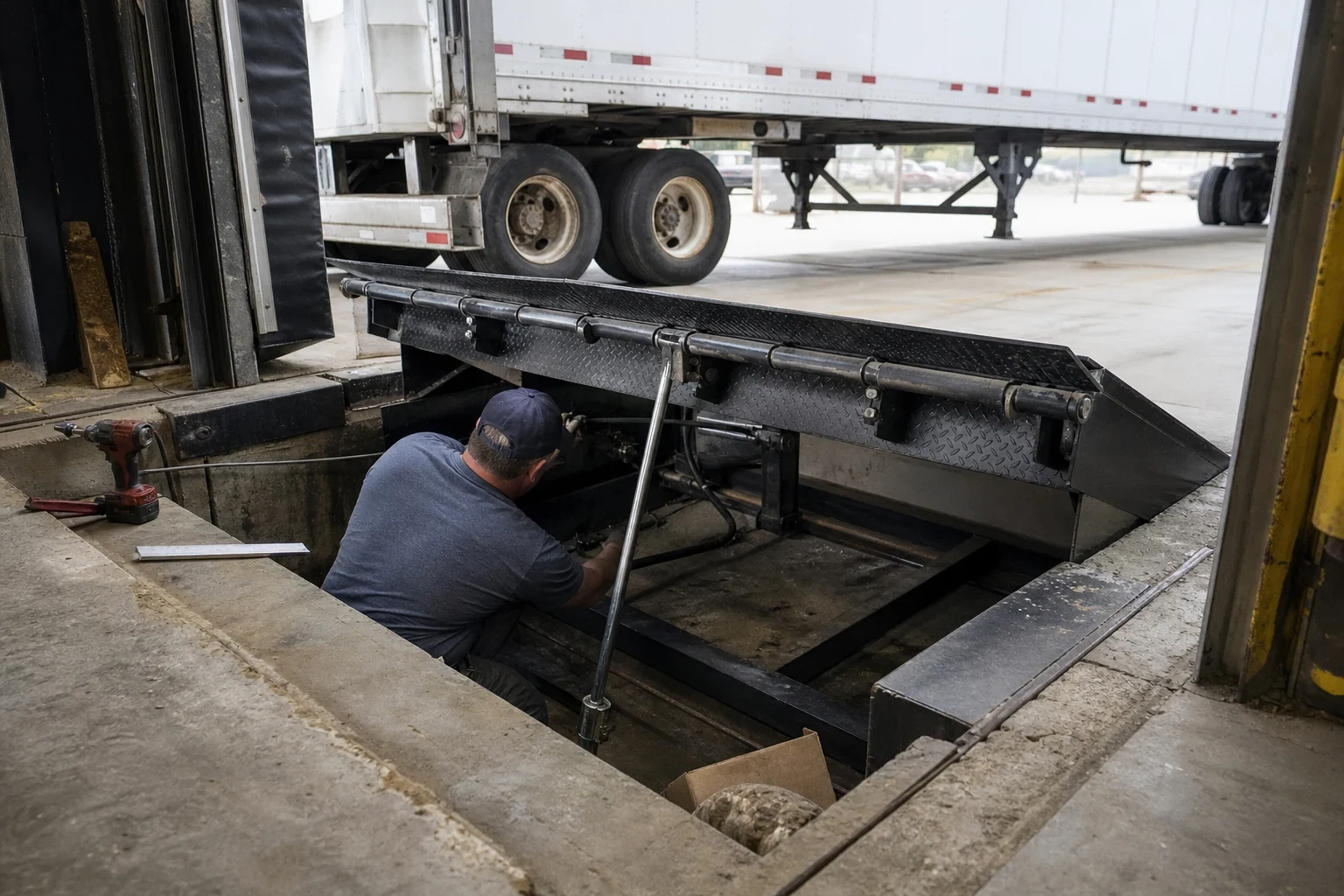
What installation covers and when it makes sense
Installation is the right call when a position is new, when old equipment is past repair, or when your freight has changed. A leveler bought for 5,000 lb pallet jacks will not hold up under a 10,000 lb forklift with a loaded pallet, and a short lip will not reach trailers that sit lower than the ones you used to receive.
Most dock equipment is anchored to steel and concrete that has to be right first. A leveler sits in a pit with an embedded curb angle along the front edge. A restraint bolts to the dock face below the bumpers. If that steel is bent or the concrete is spalled, new equipment will rock, leak hydraulic fluid or tear loose. So we check the structure before we quote the equipment.
If you are still choosing products, our Loading Dock Equipment Sales page explains the options. This page is about getting them set, wired and working.
Equipment we put in
- Dock levelers
- Hydraulic, air-powered, mechanical and edge-of-dock units. We match deck length to your height difference so forklifts climb an easy grade, and match capacity to your heaviest loaded truck, not an average one.
- Vehicle restraints
- Rotating-hook units that grab the trailer's rear impact guard, with signal lights inside and out. They keep a trailer from creeping away or leaving early while a forklift is still in it.
- Bumpers and dock faces
- Laminated rubber or steel-faced bumpers set at the right projection. When bumpers are worn or gone, trailers hit the building and the leveler lip and crack welds over time.
- Seals and shelters
- Foam-pad seals fit tightly when your trailers are a uniform size, while shelters suit a mix of trailers. Both stop drafts and keep rain off the dock floor.
- Dock lights and controls
- LED swing-arm dock lights and push-button control stations, mounted where the operator can clearly see the trailer bed.
- Removal of old equipment
- We cut out and haul away the old leveler, bumpers or restraint so the position is clear for the new equipment.
Signs it is time for new equipment
The leveler bridges at a steep angle
If forklifts scrape or bottom out crossing the plate, the deck is too short for the height difference your trailers create. A longer deck lowers the slope.
Repairs keep repeating
Cracked hinge welds, a hydraulic cylinder that has been resealed twice, or a mechanical spring that keeps losing tension usually mean the frame itself is worn out.
No restraint at the position
Wheel chocks depend on a driver remembering to set them. A restraint locks the trailer to the dock and signals the forklift operator when it is safe to enter.
Your freight got heavier
New products, denser pallets or a larger forklift fleet can push a leveler past its rated capacity. Overloaded decks bend and the lip stops sitting flat on the trailer bed.
Drafts and water at the door
Gaps around the trailer let in cold air and rain. Heating bills climb and wet floors become a slip risk, especially in a Pennsylvania winter.
How an install runs
- 1
Site check
We measure the pit, the dock height and the range of trailer bed heights you receive. We look at the curb angle, pit walls and dock face for damage, and confirm what power is available at the position.
- 2
Options explained, then a line-item quote
We lay out the choices side by side, for example hydraulic versus mechanical, and what each means for upkeep and cost. Your quote breaks out each item, with any concrete or steel repair listed separately from the equipment.
- 3
Scheduling around your shipping
We plan the work one door at a time so the rest of your docks keep receiving. Most single-position jobs fit inside a planned window you choose.
- 4
Setting, welding and wiring
We set the unit in the pit, shim it level, weld or anchor it to the embedded steel, and connect controls. Bumpers and restraints go on the dock face at measured heights.
- 5
Testing and handoff
We cycle the leveler through its full range, test the restraint against a trailer, and show your operators the controls and the daily checks worth doing.
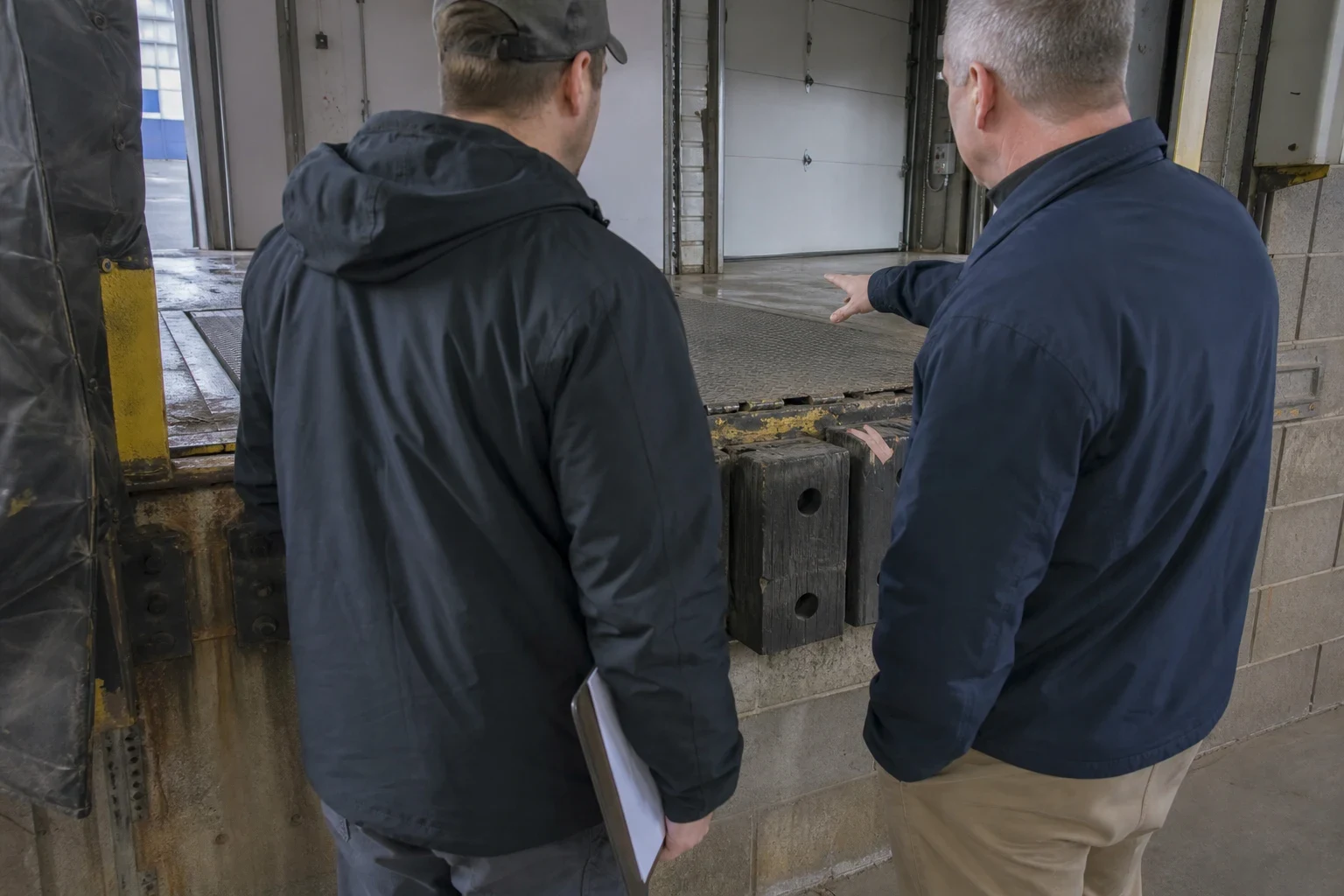
What moves the price
On most jobs, the state of your dock drives the total more than the sticker price of the unit does. Pit condition and drive type carry the most weight. Labor, equipment and any concrete or steel repair each get their own line, so nothing is buried in a single lump figure.
- Drive style and rated load
- A hydraulic leveler costs more up front than a mechanical one, but it has no springs that need periodic tensioning. A higher capacity rating calls for a thicker deck plate and heavier support beams, which raises the equipment cost.
- Pit condition
- Cracked pit walls, a bent curb angle or a pit that is the wrong size for the new unit add concrete and steel work before installation.
- Power at the dock
- Hydraulic levelers and restraints need electrical supply at each position. If it is not there, it has to be run.
- Number of positions
- Installing several doors in one visit spreads setup and travel across more units.
- When the work happens
- Work done during your normal hours costs less than nights or weekends. If a door can only go down after your last shift, that timing shows up on the quote.
Common questions about installs
Something not covered here? (570) 521-9737
Will a new leveler fit the pit we already have?
In many cases. Lots of replacement levelers are made for standard pit sizes. If yours is unusual or the curb angle is damaged, we'll let you know once we measure and explain what the fix involves.
Is hydraulic or mechanical the right pick?
A mechanical leveler runs on springs and a pull chain, so it needs no power, but its springs and hold-down need regular adjusting. A hydraulic leveler rises at the push of a button, is easier on operators and suits busy docks. Which fits depends on how many trailers each door sees per day.
Does the entire dock need to close?
It doesn't. We take one position at a time and barricade it while the other doors stay in use, and we settle the timing with you before work begins.
How can we be sure the equipment suits our trucks?
We measure the bed heights of the trailers that really come to your dock, from low-bed vans to tall reefers. That spread decides the deck length, lip length and restraint reach we suggest.
Who maintains it once it's installed?
Your operators do quick daily checks, and we teach them what to watch. For scheduled service, the Loading Dock Preventative Maintenance page describes what a routine visit covers.
Get the right equipment set the right way
Tell us what you receive, how many doors you run and what is failing now. We will explain your options and set up a site check in Freeland or nearby towns like Hazleton and Mountain Top.